Ashwagandha and Stress
A closer look at human research investigating Ashwagandha, perceived stress, and cortisol.
About the study
A 2022 systematic review and meta-analysis combined evidence from randomized clinical trials investigating Ashwagandha supplementation and stress-related outcomes.
The analysis included 12 eligible studies involving 1,002 participants.
Across the included trials, Ashwagandha supplementation was associated with reductions in stress measures compared with placebo.
However, there was considerable variation between studies, including differences in extracts, doses, populations, and study designs. The authors concluded that further high-quality research was needed before firm clinical conclusions could be made.
Key takeaway
Human research on Ashwagandha is promising, but the evidence is not uniform enough to call it clinically proven for everyone.
What the research found
Important context
The best-known KSM-66 stress studies commonly used 600 mg/day, usually divided into two doses.
One 2019 randomized trial studied Ashwagandha at 250 mg/day and 600 mg/day for eight weeks and reported reductions in perceived stress and serum cortisol at both doses.
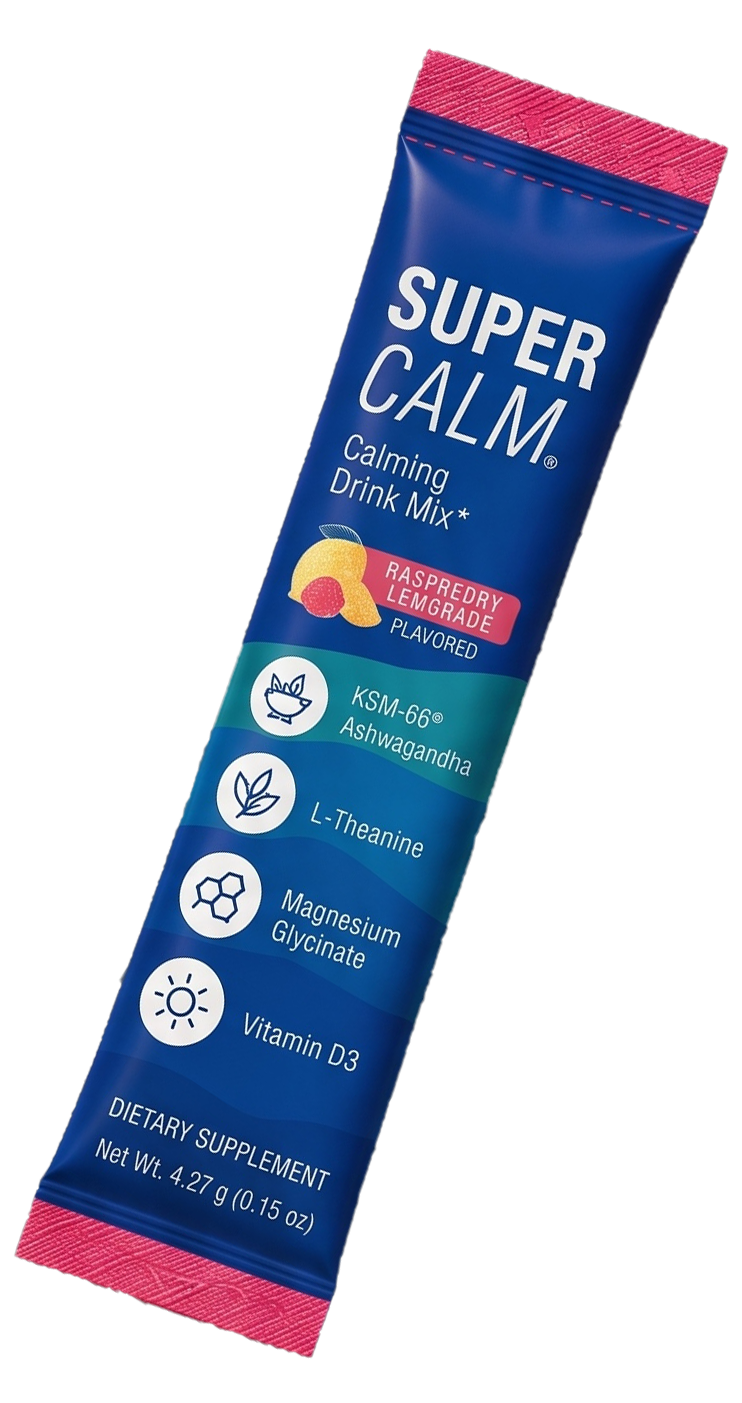
SUPRACALM contains 300 mg per serving — below the 600 mg/day used in many KSM-66 studies, though one 2019 trial also studied 250 mg/day. Our product contains 300 mg per serving.
Extract matters too.
Ashwagandha is not one chemically identical material across all products. Different extracts can have different compositions, standardizations, and study histories. That is why comparing “300 mg vs 600 mg” without also considering the specific extract can be misleading.
Study details
What this means for SUPRACALM: The evidence supports studying Ashwagandha as an ingredient for stress-related outcomes. It does not establish that SUPRACALM itself has been clinically tested. It also does not justify promising an instant response or claiming that our 300 mg dose is equivalent to the doses used in every clinical study.